Wildfire Damage Restoration San Diego, for Homes the Flames Never Reached
Wildfire damage restoration San Diego residents need most often is not for houses that burned. It is for the thousands of homes downwind of a fire that came back from evacuation to ash on every surface, soot worked into carpets and ductwork, and a smoke smell that does not leave. This county has lived through the Cedar Fire and the Witch Creek Fire, and it knows the pattern: the flames take the houses at the edge, and the smoke takes a piece of every house for miles. This page covers the cleanup of homes that did not burn, the code and brush work that lowers the odds next time, and how this free referral service connects you with independent local providers.
- Smoke and ash cleanup for unburned homes
- HVAC and duct cleaning included
- Zone 0 and brush management basics
- Independent local providers
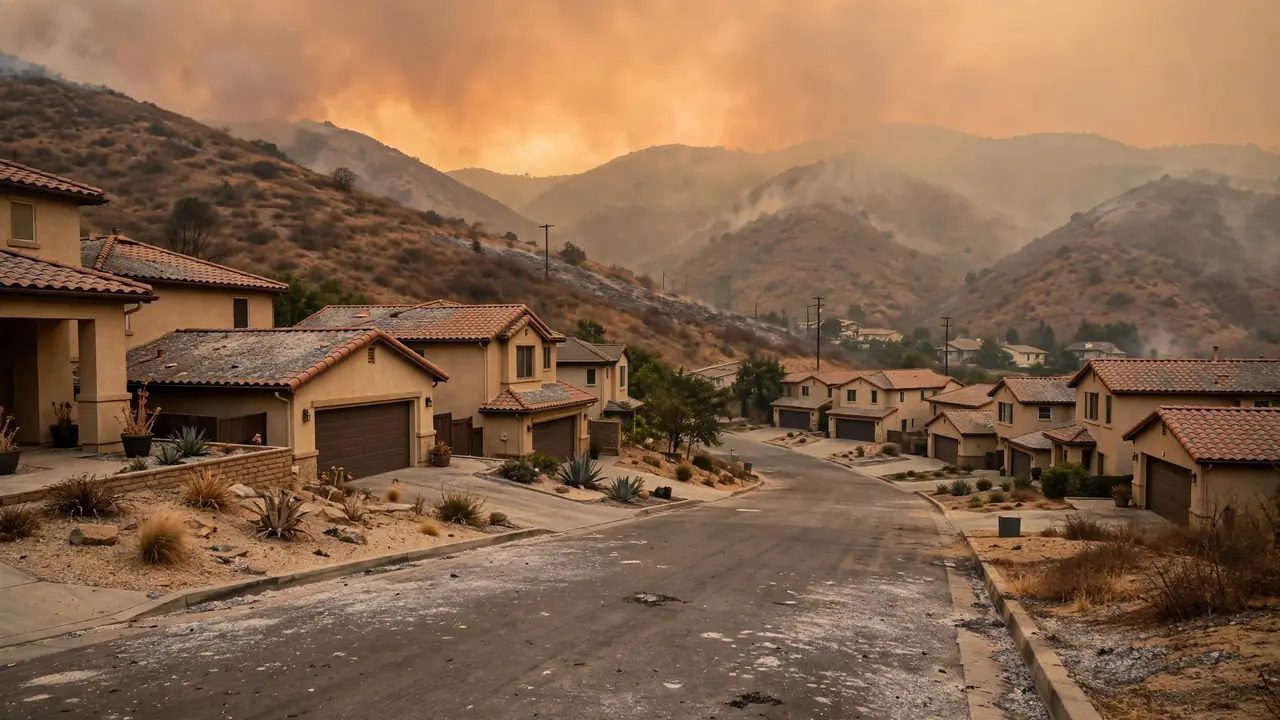
Wildfire damage restoration San Diego: two kinds of loss
A wildfire makes two kinds of loss. Homes at the edge burn, and that is structural fire work. Homes downwind do not burn, and their loss is smoke: ash and fine soot pushed into the house, the HVAC system and everything soft in it. The second loss is far more common, it is a covered loss when it comes from a specific fire, and it cleans up properly when it is treated like the soot job it is instead of a housekeeping problem.
Owners of unburned homes lose ground in two ways. Some clean the way they would clean dust, dry sweeping ash across floors and into the air, and work the residue deeper into everything it touches. Others wait, assuming the smell will fade on its own, and report the loss months later when the event is hard to document. Both mistakes are avoidable. Ash is handled wet and with HEPA filtration, and the claim is photographed and reported while the fire still has a name and a date. The rest of this page is that process, and the San Diego facts behind it.
The fires San Diego County does not forget
In October 2003, the Cedar Fire burned 273,246 acres and destroyed 2,820 structures, and 15 people died. It ran from the backcountry into the suburbs, through Scripps Ranch and Tierrasanta, in a single wind-driven push. Four years later, in October 2007, the Witch Creek Fire burned 197,990 acres and destroyed 1,650 structures, through Rancho Bernardo and toward the coast. Both fires are still the reference points every San Diego fire conversation comes back to, because both proved the same thing: in this county, the distance between open brush and a housing tract is where the losses happen.
The driver is the Santa Ana wind. For a few weeks most autumns, hot dry air pours from the desert toward the coast, humidity falls to single digits, and brush that has baked all summer is ready to burn fast and throw embers far ahead of itself. Fire season in San Diego is not a date on a calendar so much as a wind pattern, and the neighborhoods named on this page, the canyon rims and wildland edges on our service areas page, are the ones that plan around it.
- Cedar Fire, 2003. 273,246 acres, 2,820 structures destroyed, 15 deaths. The fire that burned into Scripps Ranch and Tierrasanta and set the modern standard for what a San Diego wildfire can do in one run.
- Witch Creek Fire, 2007. 197,990 acres, 1,650 structures destroyed. Part of the October 2007 firestorm that drove the largest evacuations the county had seen.
- Santa Ana winds. Autumn offshore winds drop humidity and carry embers well ahead of a fire front. Most of the county's catastrophic fire weather arrives on this pattern.
- Smoke travels farther than flames. For every home that burns, many more take ash and soot. The downwind loss is the common one, and it is the loss this page is about.
- Canyon and wildland edge. San Diego is built around canyons full of brush, which puts wildland exposure inside the city itself, not only at its edges.
- San Diego
- Chula Vista
- La Mesa
- El Cajon
- Santee
- Lemon Grove
- National City
- Imperial Beach
- Coronado
- Oceanside
- Escondido
- Carlsbad
- Vista
- San Marcos
- Encinitas
- Solana Beach
- Del Mar
- Poway
Cleaning a home that never burned
Assess and document
The provider maps where ash and soot reached: rooms, attic, HVAC, soft goods. Photographs are taken before anything is cleaned, because this record, tied to the named fire event, is the spine of the insurance claim.
Protect the clean areas
The HVAC system stays off until its filter is changed and the intake is checked, so the house does not pump ash through itself. Clean rooms are closed off from dirty ones so the cleanup moves in one direction.
Remove ash and soot
HEPA vacuuming and wet cleaning lift residue off surfaces and out of materials, the same methods as our smoke damage restoration work, run at whole-house scale. Nothing is dry swept.
Clean the HVAC and ducts
Ash collects in ductwork, blowers and filters during a smoke event, and the system will re-deliver it to every room until it is cleaned. Duct and system cleaning is part of the job, not an upsell.
Deodorize
With the residue gone, remaining odor is treated by the methods on our odor removal page: fogging, hydroxyl or ozone in an empty house, then sealing only where cleaned porous surfaces still hold a trace.
Clean outside and the pool
Ash is collected from roofs, gutters, patios and decks rather than washed into storm drains, and pool water and filters are cleaned or changed, because ash in a pool keeps re-fouling it until the system is dealt with.
Before the next wind event
- Clear the first five feet around the house: no wood piles, mulch beds against the wall, or stored items under the eaves. That is the Zone 0 idea, and it is where embers do their damage.
- Keep up the city's brush management on canyon lots: thinned, maintained defensible space between your house and open brush, as the program requires.
- Clear roofs and gutters of leaf litter before the autumn winds, and screen vents against ember entry where you can.
- Photograph your home and contents on a calm day, and keep the record off site. A claim documented before a fire is worth more than one reconstructed after it.
Burned homes and smoked homes are different work
Homes that burned
A house the flames reached is a structural loss: securing first, through our board-up and tarping work, then cleanup, then permitted rebuild under a licensed contractor, the sequence on our fire damage repair page. Nothing on this page should be read as a guide to that job, which is measured in months and decided by engineers, adjusters and inspectors.
Homes that did not burn
A smoked home is a cleaning and documentation job. The structure is sound, the systems work, and the damage sits in residue and odor. Done promptly and in the right order, most smoked homes are fully restored without any construction at all. Done late or dry swept, the same home keeps its smell through a season of open windows and still needs the professional job at the end of it.
- Usually cleaned in place. Hard surfaces, sealed floors, metal and glass, and the structure itself once residue is lifted and the system is cleaned.
- Usually sent out for cleaning. Carpets, upholstery, bedding, clothing and other textiles, which hold soot and odor deepest and clean best off site.
- Judged piece by piece. Electronics and appliances that drew smoky air through themselves, and food or medicine from ash-exposed rooms, which usually go on the loss list.
- Always addressed. The HVAC system. A smoked home whose ducts were skipped is a home that re-smokes itself every time the heat or air runs.
Zone 0, brush rules and how smoke claims work
The 2025 code and Zone 0
San Diego has adopted the 2025 California Wildland-Urban Interface Code, and its headline rule for homeowners is Zone 0: an ember-resistant zone in the first five feet around a structure, kept free of combustible material. The rule takes effect February 28, 2026 for new structures in Very High Fire Hazard Severity Zones, with later phased dates for existing buildings. Alongside it, the city's long-running brush management program requires maintained defensible space on canyon-adjacent lots. Both rules aim at the same fact: most homes lost in wildfires are lost to embers, not to the fire front itself.
How a smoke claim differs from a house fire claim
A smoke claim is a neighborhood event, not a single-house one. Thousands of similar claims arrive at insurers together, all tied to the same named fire, and they are decided on the quality of the documentation: dates, photographs, and a provider record of where residue was found and what was cleaned. There is no adjuster visit to a ruin to anchor the file, so the paper has to do the work. Report early, while the event is current, and keep the cleanup record with the claim.
General patterns, not advice about your own cover. For the cost side of wildfire smoke work, the published ranges and quote-reading method are on our restoration cost guide, and the full service, including the structural side, starts from the fire damage restoration San Diego homepage.
Common questions about wildfire damage
My house did not burn. Can wildfire smoke still damage it?
Yes, and in a big fire event this is the most common loss of all. Wind carries ash and fine soot miles past the burn area, and it enters through vents, gaps around doors and windows, and the HVAC intake while the system runs. Inside, it settles into carpets, upholstery, ductwork and the soft goods that hold odor worst. The house looks untouched from the street and smells like a campfire for months if it is not cleaned properly. Smoke damage is a real loss, not a cosmetic complaint.
Is wildfire smoke and ash damage covered by homeowners insurance?
Usually, yes, when the smoke came from a specific fire event. Fire is a covered peril on standard California homeowners policies, and smoke damage from a wildfire is part of that peril rather than a separate one. The claim is built on documentation: photographs of ash and soot, the dates of the event, and the provider's record of what was cleaned and where the residue was found. Gradual odor with no event behind it is argued differently, so report the loss while the fire is still news, not months later.
How is ash and soot cleaned out of a home?
Carefully, and never dry. Dry sweeping and dry dusting push fine ash deeper into surfaces and back into the air, so crews use HEPA vacuuming and wet cleaning methods that lift residue off instead of spreading it. Soft furnishings and textiles go through specialty cleaning, hard surfaces are washed, and the HVAC system and ducts are cleaned so the house stops re-coating itself. Outside, ash is collected from patios, roofs, gutters and pool systems rather than hosed into drains where it sets like cement.
What is Zone 0, and does it apply to my house?
Zone 0 is the ember-resistant zone in the City of San Diego's 2025 Wildland-Urban Interface Code: the first five feet around a structure, kept free of combustible material, because most homes in a wildfire are lost to embers, not to a wall of flame. The rules take effect February 28, 2026 for new structures in Very High Fire Hazard Severity Zones, with phased dates after that for existing buildings. Whether your lot sits in one of those zones is shown on the city's fire hazard maps.
What should I do when I come home after an evacuation?
Work in this order. Check the official word that your area is cleared, and treat any damage as a scene until you have walked it once. Photograph ash, soot and any damage before cleaning anything. Do not run the HVAC system until its filter has been checked and changed, because the ducts may be loaded with ash. Do not dry sweep. Keep ash off skin and out of the air with gloves and a mask, and call your insurer and then a provider while the event is still current.
Which San Diego areas face the most wildfire exposure?
The canyon and wildland-edge communities, where homes back onto open brush: Scripps Ranch and Tierrasanta inside the city, Rancho Bernardo and Rancho Penasquitos to the north, and Ramona, Lakeside and Crest in the East County foothills. These are the areas the Cedar and Witch Creek fires burned into, and they sit in or near the city's Very High Fire Hazard Severity Zones. Exposure does not mean a fire is likely at your house this year. It means smoke, ash and ember risk belong in your planning.
Your house stood. The smoke moved in anyway.
Ash and soot cleaned properly, in the right order, come out. Left alone or dry swept, they settle in for the season. Reach out now and get connected with a local provider who handles wildfire smoke cleanup across San Diego County, and document the loss while the event is still current.
Get Help Now