Odor Removal San Diego: End the Smoke Smell at the Source
Odor removal San Diego homeowners ask for after a fire is not an air freshener job. Smoke smell lives in soot residue that has settled into drywall, wood, fabric and ductwork, and it comes back every time the house warms up until that residue is gone. Real deodorization works in a strict order: find and remove the source, clean what the smoke touched, then treat what is left with fogging, ozone or hydroxyl, and seal only at the end. This page explains each step in plain terms, and how this free referral service connects you with independent local providers who do the work that way.
- Source removal before any treatment
- Ozone only in empty buildings
- HVAC and duct cleaning included
- Independent local providers
Why smoke smell outlives the fire
Smoke odor persists because smoke is not a gas that leaves. It is a residue of tiny particles and oils that settles into every porous surface it touches and keeps releasing smell for months. Removing it means removing the residue: burned material out, soot cleaned off and out of materials, and only then air treatment and sealing. Anything done before the source is gone is a cover-up with a short life.
Heat is what betrays a quick fix. A house can smell clean on a cool morning and smell like the fire again by mid-afternoon, because warm air pulls odor out of drywall, wood and fabric that still hold residue. That is why two homes with the same fire can end up with very different results: one had its soot physically cleaned and its sources removed, the other had its air treated and its walls painted. The order is the whole job, and it is why fire damage restoration in San Diego treats odor as a stage of the cleaning, not a spray at the end of it. The cleanup standard behind the work is ANSI/IICRC S700, the fire and smoke restoration standard.
Odor removal San Diego methods, matched to the source
Each treatment reaches a different place, so each one is used for a different part of the job. A provider who leads with one machine for every house is skipping the diagnosis.
Source removal first
Burned material, charred wood, melted plastic and soot-loaded insulation are odor sources that no treatment can fix in place. They come out. After that, soot is cleaned from surfaces with the dry and wet methods the smoke page describes. Every odor job that lasts starts here, and every one that skips it fails later.
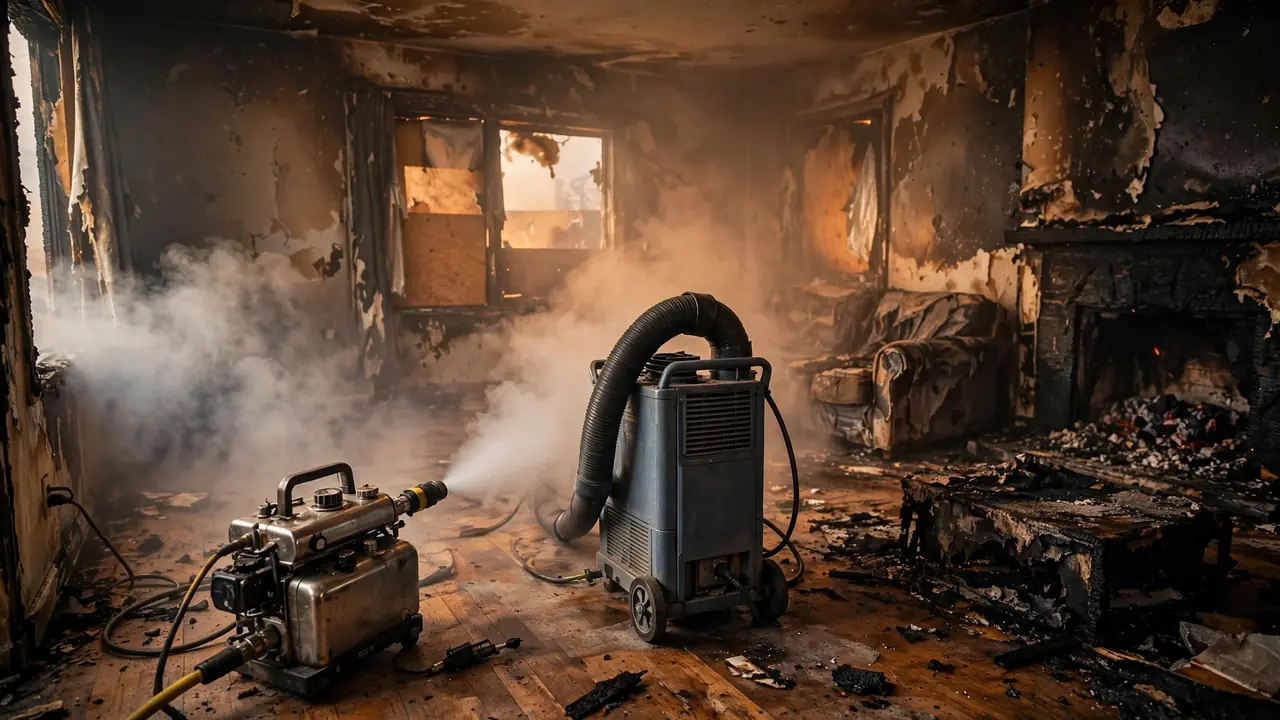
Thermal fogging
A heated fogger turns a deodorizing agent into a fine mist that travels the way smoke traveled: into wall cavities, fabrics, carpets and the corners a wipe never reaches. The agent neutralizes odor compounds where they sit. Fogging treats the paths and the porous materials, which is why it follows cleaning rather than replacing it.
Ozone treatment
Ozone generators fill a sealed space with a reactive gas that breaks down odor molecules, including inside materials fogging cannot reach. The rule is absolute: ozone runs only in an empty building, with people, pets and plants out, and the space is aired before anyone returns. It is a strong tool with a safety condition attached.
Hydroxyl generators
Hydroxyl machines make reactive molecules that break down odors in the air and on surfaces, and unlike ozone they can run while a building is occupied. They work more slowly, so they suit lighter smoke exposure, occupied homes, and the tail end of a bigger job. A provider should be able to say plainly why your job gets hydroxyl, ozone, or both.
Sealing, last and only after cleaning
An odor-blocking primer on drywall, wood and framing locks in the trace of odor that survives proper cleaning in porous material. It is a legitimate final step. It is also the most abused one: sealer over uncleaned soot traps the smell under a coat that heat will push it back through, which is the failure described below.
HVAC and duct cleaning
Smoke goes where the air goes. Soot coats the inside of ductwork, the blower and the filter housing, and the system then re-delivers the smell to every room each time it runs. Duct and system cleaning is part of odor work, not an extra. It belongs with the soot cleanup on our smoke damage restoration page, and a house whose ducts were skipped rarely stays smell-free.
How an odor removal job actually runs
Find the source
The provider maps where the smell is held: burned materials, soot depth, soft furnishings, and the HVAC system. That map decides the sequence, and it becomes part of the documentation your claim is built on.
Remove and clean
Sources come out and soot comes off, room by room: walls, ceilings, hard surfaces, and the contents that can be cleaned. This is the stage that decides whether the rest of the job works at all.
Treat
With the source gone, the chosen treatments run: thermal fogging into the smoke's paths, ozone in the sealed and empty space, hydroxyl where the building stays occupied, and duct cleaning so the system stops re-spreading odor.
Seal and verify
Cleaned porous surfaces are sealed where the scope calls for it, the house is aired, and then it is checked, including on a warm day, because heat releases held odor. If a room still smells, the crew goes back to step one for that room.
Painting over soot is how odor work fails
It is the cheapest quote and the most expensive outcome. Soot is oily and acidic, and paint laid directly over it bleeds, stains and flakes, while the odor sealed underneath returns with the first warm week. The room then has to be cleaned anyway, through the new paint. The honest sequence costs less: clean the soot off properly, treat, then seal and paint as the finish. If a quote for a smoke-damaged room is mostly painting, ask what cleaning happens before the primer.
Wildfire smoke is the same problem, wider
A house that never burned can still take in days of wildfire smoke through vents, gaps and its own HVAC intake, and the odor behaves exactly like structure-fire smoke once it is inside. The cleanup path is the one on this page, run at the scale of the exposure, and our wildfire damage restoration page covers the San Diego side of it: ash, soot and the canyon neighborhoods that see it most.
Odor work starts with the fire cleanup, around the clock
Odor is set in the first days after a fire. Soot left sitting keeps etching surfaces and sinking into porous materials, and every day of delay makes the smell harder to fully remove. Requests through this service are read around the clock, and the provider's first visit covers the odor map along with the securing and cleaning plan, so deodorization is scoped from the start instead of quoted as a surprise later.
While you wait, resist the two common mistakes: do not paint anything, and do not run the HVAC system, which spreads soot through the ductwork. The contact page carries the first steps in order.
Smoke smell right now?
Tell us the ZIP code, what burned and how much of the house smells. That is enough to get the cleanup and odor plan moving.
Request Emergency HelpOpen 24 hours, 7 days a week, across San Diego and the surrounding communities.
Coverage across the city
Coverage runs across the full service area: the older homes of North Park, Hillcrest and Clairemont, family homes in Mira Mesa and Rancho Bernardo, and the canyon-edge streets of Scripps Ranch and Tierrasanta where wildfire smoke is a regular visitor. The same source-first odor standard applies everywhere, and the service areas page lists every community and ZIP code covered, 41 ZIP codes in all.
Wondering what all this costs before you call? Odor work is part of the fire cleanup bill, and Angi's San Diego guide puts fire and smoke restoration at typically $3,000 to $50,000 depending on the size of the loss. The fire damage restoration cost guide shows how that bill is built, line by line.
- Source first, always. Residue removed and cleaned is odor gone. Residue covered is odor postponed, and the postponement is billed twice.
- Ozone has one rule. Empty building, no exceptions. Any provider who treats it casually is telling you something about the rest of their work.
- Odor work is claim work. On a covered fire claim, deodorization sits inside the restoration scope. The documentation of what was cleaned, treated and sealed is the record the claim reads.
Common questions about odor removal
Why does the smoke smell keep coming back after cleaning?
Because the smell is not in the air. It is in the soot residue left on and inside porous materials: drywall, wood, fabric, insulation, and the dust inside your ductwork. Air out the house and the smell fades for a day, then the materials release it again, especially when the sun warms the rooms. Odor work that starts with sprays and fogging, before the residue itself is cleaned and removed, is treating the symptom. Source first, then treatment, is the order that holds.
Is ozone treatment safe?
Ozone works, and it has one firm rule: it runs in an empty building. People, pets and houseplants stay out while the generator runs and until the space has aired and the ozone has broken down. A provider who offers to run ozone while your family sleeps in the next room is not following the standard. Used correctly, in a sealed, empty, already cleaned space, ozone is a strong tool for smoke odor that has soaked into materials. Used casually, it is a health risk.
What is the difference between thermal fogging and ozone?
Thermal fogging makes a fine mist of deodorizing agent that behaves the way smoke behaved: it drifts into the same cracks, fabrics and cavities the smoke reached, and neutralizes odor compounds where they sit. Ozone is a gas generated on site that reacts with odor molecules throughout a sealed, empty space, including inside materials. Fogging follows the smoke's path; ozone fills the whole volume. Many jobs use both, in sequence, after cleaning, and the choice between them is made on what burned and where the smell is held.
Can I just paint over the smoke smell?
Painting over soot is the most common way odor work fails. Soot is oily and acidic. Paint laid over it bleeds through, flakes, and seals the odor in only until heat or humidity brings it back through the new coat. The order that works is clean first, then seal. Once soot and residue are properly removed, an odor-blocking primer on drywall and wood is a legitimate final step that locks in whatever trace remains. Skipping the cleaning and going straight to the primer is money spent twice.
How long does odor removal take?
It runs inside the fire cleanup, not after it, and it takes as long as the source work takes. A single-room smoke event can clear in days. A whole-house loss, with soot in the ductwork and odor soaked into soft furnishings, runs one to two weeks alongside the cleaning and contents work. The finish line is a check, not a date: rooms are assessed after treatment and airing, including on a warm afternoon, because heat is what releases held odor. If it still smells, the source hunt starts again.
Does insurance cover smoke odor removal after a fire?
On a covered fire claim, deodorization is a normal part of the restoration scope, because fire is a covered peril on standard California homeowners policies and smoke damage is part of the loss. The odor work is documented like the rest of the job: what was cleaned, what was treated, what was sealed. What a policy pays is decided by its own wording and your adjuster, so treat this as the general pattern. Standalone odor problems with no fire event behind them are a different conversation.
Every warm day sets the smell deeper.
Get the source removed and the odor treated in the right order, while the residue is still where the cleaning can reach it, and the smell stays gone instead of coming back with the weather.
Get Help Now