Commercial Fire Damage Restoration San Diego, Planned Around Your Business Hours
A kitchen fire at closing time does not have to close a business for a month. Commercial fire damage restoration San Diego companies rely on is built around one fact: every closed day costs more than the cleanup. The work is phased so the undamaged part of your building keeps trading, the fire-damaged part is cleaned and rebuilt under containment, and every step is documented for your insurer, your adjuster and your landlord. This service is a free referral service that connects San Diego businesses with independent local restoration providers who work that way.
- Phased work, stay open where you can
- After-hours and weekend work
- Adjuster and landlord documentation
- Independent local providers
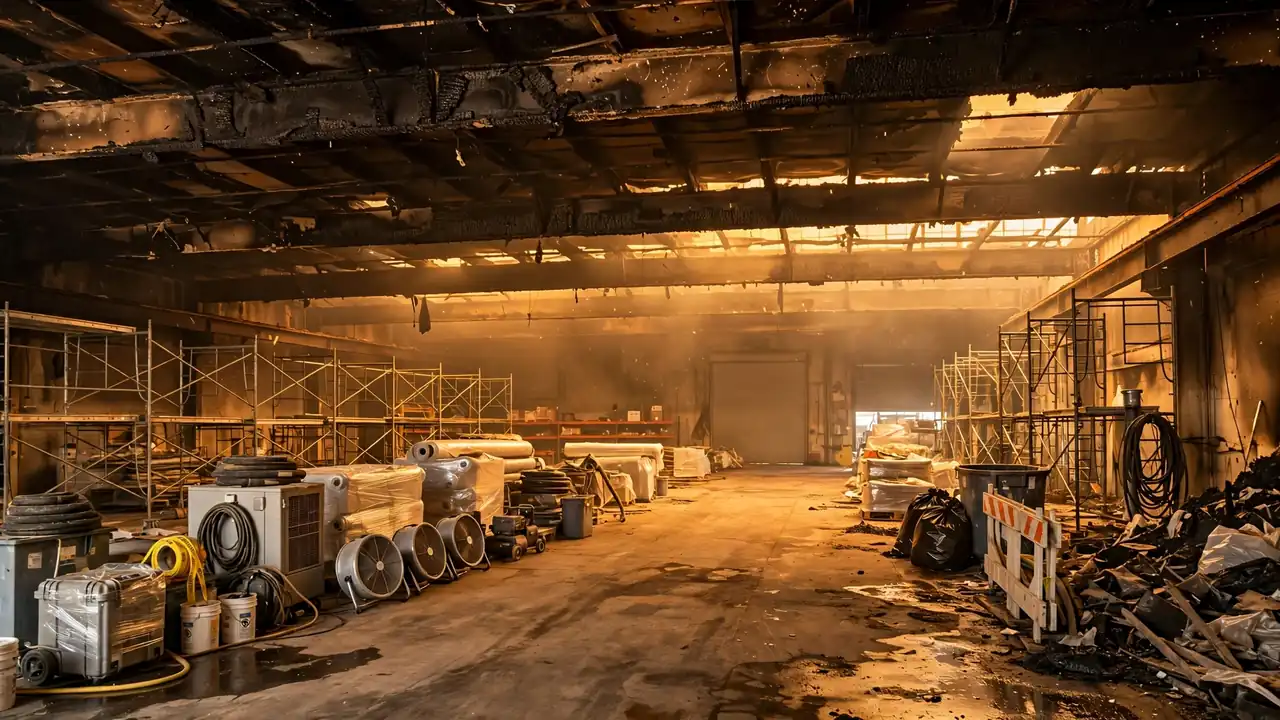
The cleanup bill is rarely the biggest cost
Commercial fire damage restoration in San Diego is planned around one goal: keep the business trading. Work is phased so part of the building stays open, cleanup and rebuild run after hours where they can, and every step is documented for the insurer, the adjuster and the landlord. Downtime, not the cleanup bill, is usually the biggest cost of a commercial fire.
Commercial fire damage in San Diego arrives at every scale. A grease fire in a restaurant kitchen in the Gaslamp Quarter. An electrical fire in a Kearny Mesa light industrial unit. A warehouse fire near the port, a retail fire in Mission Valley, a lab or office fire in Sorrento Valley where the stock is electronics and paperwork instead of shelves. The flames are usually the smallest part of the loss. Smoke and soot travel through the whole unit and into shared HVAC systems, water from the firefighting soaks stock and floors, and the building sits open until someone secures it. The first job is always the same: secure the property, protect the contents and the records, and get a phased plan a business can actually trade around.
Commercial fire damage restoration San Diego services, matched to the building
The cleanup science is the same everywhere. The plan around it is not.
Offices
The classic office fire is small and the smoke damage is not: one burned room, and soot through every office the HVAC reached. Work runs floor by floor, server rooms, files and electronics get protected and cleaned first, and deodorization is scheduled so staff are back at desks in days where the readings allow, not weeks.
Retail
For a shop, the sales floor is the business and the stock is the claim. Merchandise is inventoried and moved out for cleaning or documented for the contents claim, soot comes off fixtures and shelving, and the scope is split so the store can reopen on a reduced floor while the stockroom rebuilds behind it.
Restaurants
Fire in a kitchen is a health question before it is a building question. Soot on food contact surfaces closes the kitchen until it is cleaned and cleared, and reopening waits on the health inspection. The plan sequences cleaning, any rebuild and the inspector's visit so no step is paid for twice, and the dining room can often return before the kitchen does.
Warehouses and light industrial
Big volumes, racking and dock doors. Fire and smoke spread high and wide, firefighting water pools on the slab, and the inventory documentation runs alongside the cleanup because the stock claim is often bigger than the building claim. Rebuild scope in these buildings is contractor work, permitted and inspected like any other.
Multi-tenant buildings
One unit's fire is three units' smoke problem. Property managers need the source unit secured, each affected unit documented separately for separate claims, shared systems like HVAC and corridors cleaned, and tenants told plainly how long their space is disrupted. Fast, documented work is what keeps a fire loss from becoming a lease dispute.
What it costs a business
Commercial pricing follows the same logic as residential: emergency securing, cleanup and deodorization, then rebuild, priced from a written scope. Angi's San Diego guide puts fire and smoke restoration at typically $3,000 to $50,000, and the full breakdown of how those numbers are built is in our restoration cost guide.
Read the cost guidePhased cleanup, containment and after-hours work
The providers who earn their fee on a commercial job do it in the planning, not the cleaning. The first survey divides the building into zones: what burned, what is soot-damaged, what is clean. Damaged zones are sealed under containment, negative air keeps soot and odor out of the trading areas and the shared ductwork, and the work is sized to the zone instead of the whole building. As zones pass their cleaning checks, they hand back to the business and the containment line moves.
The noisy, disruptive stages, securing the building, demolition and heavy cleaning, are pushed to evenings, nights and closed days wherever the building allows. Deodorization and drying equipment is quiet work that runs unattended, with the crew returning for checks and adjustments. A business that understands the phase plan can tell its own customers exactly what is open and what is not, which is worth money on its own.
- Containment first. Plastic barriers and negative air keep the work zone's soot and odor out of your trading space, your stock and your HVAC system.
- Checks, not guesses. Cleaning is verified room by room before a zone hands back. The record is also your claim file and your landlord's proof.
- Protect what earns. Stock, servers, files and kitchen equipment are inventoried, moved or covered before cleanup starts, and contents work follows the same process as our contents pack-out page describes for homes.
- One scope, in writing. Zones, phases, after-hours schedule and the cleanup standard, agreed before work starts. Compare it against the fire damage restoration San Diego standard on our homepage.
Disaster planning is work you do before the fire
The businesses that lose least to fire are the ones that treated recovery as planning, not just cleanup. The plan is short: keep a photo and inventory record of the building, stock and equipment while everything is clean, agree in advance who makes the calls, the insurer, the landlord or property manager, the restoration provider, and keep that list somewhere that is not inside the building that burns. Know where the utility shutoffs are, and keep digital copies of leases, policies and key records off site.
San Diego adds its own rows to that list. Businesses in the canyon and wildland edge districts, and any building near open brush in Sorrento Valley, Kearny Mesa or the I-15 corridor, should know their wildfire exposure the way our wildfire damage restoration page sets it out, because a wildfire smoke event can close a business that never saw a flame. None of this is expensive. All of it is cheaper than learning it standing in a soot-covered unit with the phones down.
Two claims run at once on a commercial loss
The property claim
The building and contents damage, paid on the provider's documentation: dated photos, damage mapping, equipment logs and the itemized scope. Fire is a covered peril on standard California homeowners and commercial property policies, so a sudden fire and the smoke and water damage that come with it sit at the core of the cover. What decides the outcome is the record, which is why documentation starts at the first visit, not at the invoice.
The interruption claim
Lost income while you are closed or cut back, paid on your trading records set against the restoration timeline. This is why the phase plan matters beyond convenience: every day the plan wins back is a day that claim does not have to argue about. Keep the two claims in one file, because the adjusters will read them against each other.
General patterns for California commercial policies, not advice about yours. Rebuild work after a fire is contractor work: in California, work of $1,000 or more needs a CSLB licensed contractor, and reconstruction is a Class B general building job, while the cleanup itself follows the ANSI/IICRC S700 standard for fire and smoke restoration. The first step after any fire, before either claim moves, is securing the building, which is the work on our board-up and tarping page.
Common questions from San Diego businesses
Can our business stay open during commercial fire damage restoration?
Often, yes. The usual pattern is phased work: the fire-damaged area is closed and cleaned under containment while the rest of the building keeps trading, then the crew rotates. A restaurant might lose its dining room while the kitchen reopens first, or the other way around. What cannot reopen is any area the fire marshal or health inspector has not cleared, and any space where soot and odor work is still running. The provider should tell you which areas close, and for how long, before work starts.
Can the cleanup and rebuild work happen after hours?
A large share of it can, and on commercial jobs it usually does. Board-up, demolition and the noisiest cleaning are often scheduled for evenings, nights or the days the business is closed. Deodorization and drying equipment then runs unattended around the clock, checked on scheduled visits. After-hours scheduling is part of the scope conversation on a commercial job, not a special favor, because the provider knows the alternative is a longer closure and a bigger interruption claim.
Who needs the documentation from a commercial fire loss?
More people than on a home claim. Your insurer and its adjuster work from the photos, soot and damage readings, and itemized scope. Your landlord may require proof the unit was cleaned and repaired to standard before you reopen or before lease questions come up. Neighboring tenants may have their own smoke claims if odor crossed a shared wall or a shared HVAC system. A property manager needs the file for the building record. A proper commercial scope is written so all of those readers can use it.
Will insurance cover the income we lose while closed?
Business interruption cover is a separate part of most commercial policies, and it responds when a covered event forces you to close or cut back. Fire is a covered peril on standard California policies, which is why the property claim and the interruption claim usually start together. The interruption claim is paid on records: the restoration timeline, your closure dates and your trading figures. Start both claims the same day, keep both files together, and let your adjuster confirm what your own policy says.
How long does a commercial fire damage job take?
It splits into two timelines. Cleanup, soot removal and deodorization on a contained fire can run days to a couple of weeks. Rebuild, framing, electrical, finishes and inspections, runs weeks to months depending on the damage and the permit load. A smoke-only loss in one suite is a different job from a structural fire in a warehouse. The honest answer comes from the first survey: your provider should give you a cleanup timeline and a rebuild timeline separately, in writing, with the items that could stretch each one named.
What should a manager do in the first hours after a commercial fire?
Wait for the fire department to release the building, then secure it: boarded windows and doors and a tarped roof keep weather, thieves and liability out. Keep staff and customers out of damaged areas, protect stock, files and electronics from soot, and photograph everything before cleanup starts. Call your insurer's commercial claims line, then call for restoration. Businesses that come out of a fire best are usually the ones whose manager had the insurer, landlord and provider phone numbers written down before they ever needed them.
Fire damage in your building right now?
Secure the building, keep people out of the damaged areas, and get the phase plan started before the next trading day is lost. Reach out now and get connected with a local provider who does commercial work across San Diego, from Downtown and Mission Valley to Kearny Mesa and Sorrento Valley, and the other communities on our service areas page. The residential side of the service lives on our fire damage restoration San Diego homepage.
Get Help Now