Fire Damage Repair San Diego, From Charred Framing to Finished Rooms
Cleanup makes a burned home safe, clean and dry. It does not make it a home again. Fire damage repair San Diego homeowners need after the cleanup is the building work that follows: assessing what the fire weakened, replacing what cannot be saved, and rebuilding the rooms under permit and inspection. This page explains how that stage is judged, licensed and sequenced, and how this service connects you with independent local providers who do the work.
- Assessment before demolition
- Class B licensed rebuild work
- Permits and inspections in order
- Independent local providers
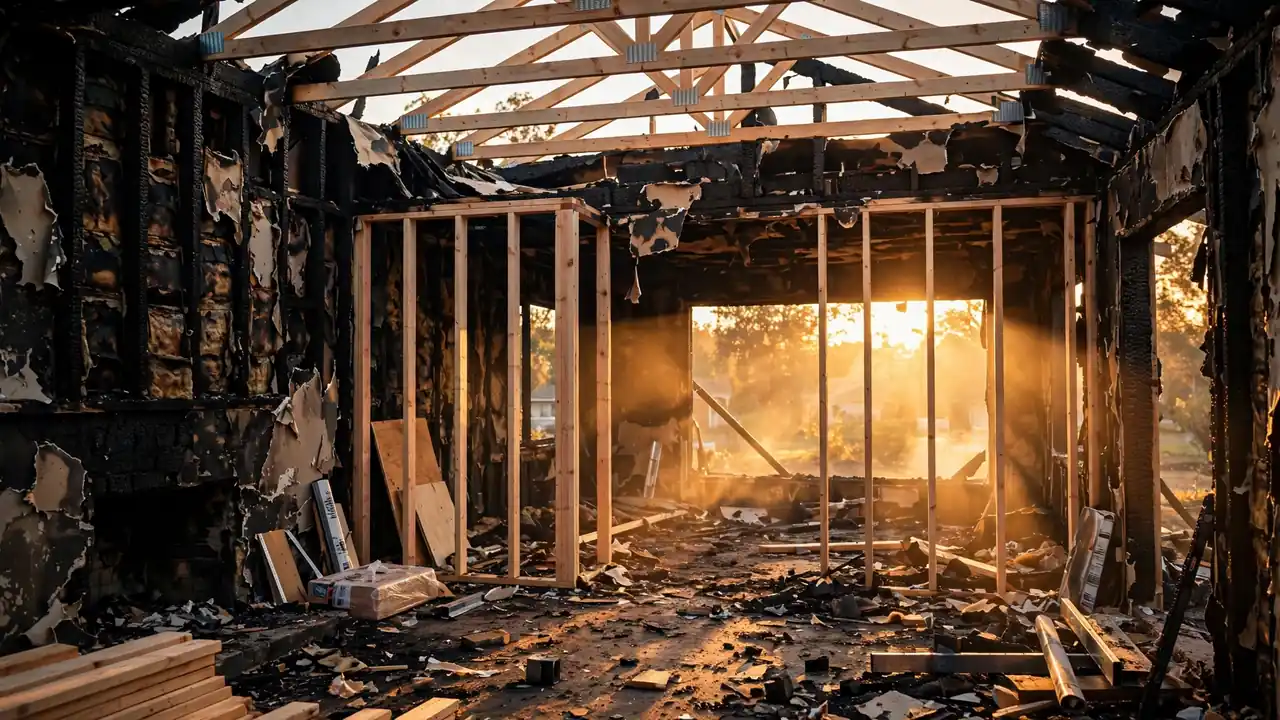
Fire damage repair San Diego: cleanup ends, rebuilding begins
Fire damage repair in San Diego starts when cleanup ends: a structural assessment decides member by member what is repaired and what is replaced, then licensed contractors rebuild framing, roofing, systems and finishes under permit, with inspections before walls are closed. It is building work, quoted and scheduled apart from cleanup.
The distinction sounds formal and is actually simple. Cleanup is the emergency stage, run to the ANSI/IICRC S700 standard: debris, water, soot and odor, covered on our fire damage cleanup page. Repair is construction. In California it is licensed work, and the license question is not paperwork: it decides whether the permits exist, whether the inspections happen, and whether your insurer and your city treat the rebuilt rooms as legal work. The sections below follow the repair stage in the order it happens.
The structural assessment comes first
A proper repair job starts with an assessment, not a demolition. The contractor works through the fire rooms and the rooms above and beside them, checking what the heat and flames actually did: how deep the char runs in each framing member, whether connections and fasteners were weakened, what the roof structure took, and what smoke and water did behind the surfaces. Heat travels along framing and through cavities, so the damage map is usually wider than the burned patch.
Then each member gets a decision: clean and keep, strengthen, or replace. Surface char on sound wood often cleans and stays, sometimes with a new member sistered alongside for strength. Deep char, cracking and sagging mean replacement. On larger losses, structural questions go to an engineer rather than being settled by eye. The map and the decisions become the repair scope, and the scope becomes the quote.
- The damage map. Every affected member and surface recorded, including rooms above the fire and cavities behind clean-looking walls, drawn up before anything is demolished.
- Char depth checks. Char is measured, not guessed. Shallow char on a full-size member is a cleaning job; deep char that eats the cross-section is a replacement.
- The keep-or-replace line. Each piece of framing gets a recorded decision with a reason. That record is what the insurer prices and what a later dispute is settled from.
- The written scope. Repair quoted room by room and trade by trade, with permits and inspection stages named. A scope that cannot be read cannot be checked.
What the rebuild actually involves
Framing and structure
The skeleton goes back first: replaced studs, joists and rafters, strengthened connections, floors leveled where heat and water warped them. Nothing else can be sequenced until the structure is right, because drywall and finishes only copy what the framing tells them. This is the stage inspections watch most closely.
Roof, drywall and finishes
A weather-tight roof closes the building in, then insulation and drywall go back, and finishes follow: flooring, cabinets, trim and paint. Finishes come last for a reason. Paint and drywall go over surfaces that were soot-cleaned and sealed first, the work on our smoke damage restoration page, or the odor and staining come through the new work within weeks.
- Electrical and plumbing. Heat damages wire insulation and plastic pipe behind walls that look fine. Both systems are checked, repaired under permit, and signed off before walls close.
- Roofing and weather-tightness. Temporary tarping from the cleanup stage is replaced by real roofing as early in the sequence as the structure allows, because every rain on an open roof restarts the water damage.
- Inspections at stages. Framing, systems and final inspections happen in order, before the work they cover is hidden. A failed inspection is fixed and re-inspected, not papered over.
- Final walkthrough. The finished rooms are checked against the written scope you agreed at the start, item by item, before the job is signed off.
How the repair timeline runs
Emergency repairs
Board-up, temporary roofing and making the building safe and weather-tight. This overlaps the cleanup stage and is measured in days. Our board-up and tarping page covers it.
Framing and roof
Demolition of what cannot be saved, structural replacement, and a real roof. This phase waits on permits and the agreed scope, and it sets the pace for everything after it.
Systems and drywall
Electrical, plumbing and HVAC repairs, inspections, then insulation and drywall. The house starts to look like a house again here, and the inspection sign-offs accumulate.
Finishes and final inspection
Flooring, cabinets, trim, paint and fixtures, then the final inspection and walkthrough. Finishes are the most material-dependent phase, and choices made early keep it moving.
Put together, repair is a weeks-long clock, and months on larger losses, which is why honest providers quote it apart from the days-long cleanup. What stretches the calendar is rarely the building work itself: it is permits, inspection scheduling, materials arriving, and the scope agreement with the insurer. Knowing the phases lets you ask the right question at each stage: not "when will it be done", but "what is this phase waiting on".
The rules the rebuild runs under
Inside the city, building permits for fire repair come from the City of San Diego Development Services Department. In the unincorporated communities on our service areas page, they come from the County. Structural, electrical and plumbing repairs after a fire are permit work, inspected at stages before walls close. Rebuilds in the city's Very High Fire Hazard Severity Zones also have to meet the state's wildland-urban interface code, including the ember-resistant zone around the building.
The license rule is simple to state. Since January 2025, under AB 2622, California requires a licensed contractor for work of $1,000 or more in labor and materials combined, and any work needing a permit needs a licensed contractor whatever the price. Rebuild work calls for a Class B general building contractor. Cleanup and drying sit in the other stage, run to the ANSI/IICRC S700 standard. You can check any contractor's license, free, on the CSLB website before you sign.
Why the license is your protection
A license is what makes the rest of the system work. Permits are pulled by licensed contractors, so unlicensed work usually means unpermitted work, and unpermitted structural repair is a problem that surfaces at sale, at refinance, or when the insurer asks for the paperwork. The license also gives you somewhere to go: a bond, a complaint record, a regulator. After a fire, when the pressure to start is highest, the license check takes five minutes and settles the question. When you are ready to start, contact the service and describe the damage; the provider confirms their scope, license and price with you directly.
Common questions about fire damage repair
Who is allowed to do fire damage repair in California?
For work of $1,000 or more in labor and materials combined, California law requires a licensed contractor. That threshold has applied since January 2025 under AB 2622. Rebuilding work, framing, roofing, drywall and the trades, calls for a Class B general building contractor, and any work needing a building permit needs a licensed contractor whatever the price. Cleanup and drying are a different stage, usually run to the ANSI/IICRC S700 standard. You can check any license free on the CSLB website.
Do I need a permit to repair fire damage in San Diego?
Usually yes for the structural and systems work. Inside the city, permits come from the City of San Diego Development Services Department; in unincorporated areas, from the County. Repairs to framing, roofing, electrical and plumbing after a fire are permit work, and the job is inspected at stages before walls are closed. Simple surface finishes may not need one. A licensed contractor should tell you plainly which parts of your scope need permits and pull them before work starts, not after an inspector asks.
How long does the rebuild take after a fire?
Weeks, and for larger losses, months. The honest answer is a sequence, not a date: permits and the insurer's agreed scope first, then framing and roof, then systems and drywall, then finishes and final inspection. Small single room rebuilds sit at the short end. Multi-room losses stretch on materials, inspection scheduling and trades availability. Cleaning and drying are measured in days; repair runs on this longer clock. Your contractor should give you the phases in writing, with what each phase waits on.
Can burned framing be saved, or does it all come out?
Some of it, and the decision is member by member. Framing with surface char that has not lost cross-section can often be cleaned, treated and kept, sometimes strengthened by sistering a new member alongside. Framing burned deep, cracked or sagging comes out and is replaced. The assessment looks at char depth, fasteners and connections, and what loads each piece carries. Structural questions on larger losses belong to an engineer, not a guess. Whatever the decision, it should be recorded in the written scope.
Does insurance pay for the rebuild as well as the cleanup?
On a covered fire claim, usually yes, because both are part of repairing the same loss. Cleanup is the urgent stage and is documented with photos, readings and itemized lines. Rebuild is paid against the scope the adjuster agrees, after your deductible, and it is where detailed documentation earns its keep. Disputes usually come from scope gaps, work started before the scope was agreed, or finishes upgraded beyond the original. Policies differ, so confirm how yours handles the rebuild stage early.
What is the difference between fire cleanup and fire repair?
Cleanup makes the building safe, clean and dry: debris out, firefighting water extracted and dried, soot and odor removed, following the ANSI/IICRC S700 standard. Repair puts the building back: framing, roofing, wiring, plumbing, drywall and finishes, done by licensed contractors under permit where the work requires it. The two stages are often different providers and always different scopes. Trouble starts when a cleanup quote is mistaken for a finished home, or a repair crew closes walls over soot and moisture nobody cleaned.
Clean and dry is the halfway point. Get the rebuild scoped.
The difference between a repaired home and a patched one is the assessment, the license and the inspections. Get all three in writing before the work starts. The full service overview is on the fire damage restoration San Diego homepage. Reach out now and get connected with a local provider.
Get Help Now