Emergency Board Up Service San Diego: Secure the Building Before Nightfall
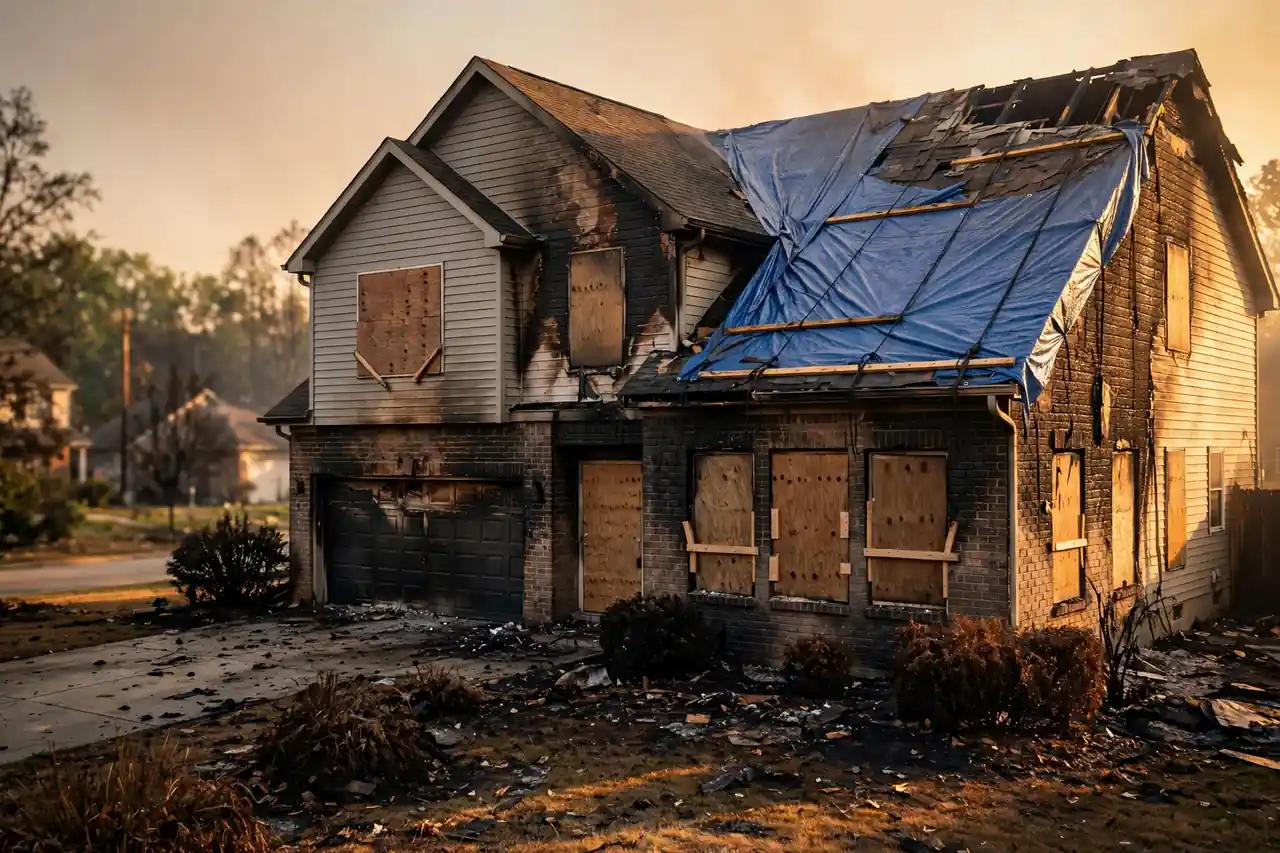
The fire trucks leave and the building stands open. A board up service San Diego property owners can reach at any hour is the first restoration job on every fire: plywood over the broken windows and doors, a tarp over the roof openings, and a site a stranger cannot walk into. It protects the building from weather and theft, it protects you from liability, and it protects the insurance claim, because insurers expect a fire-damaged building to be secured. This page explains how the work runs, and how this free referral service connects you with independent local providers across San Diego.
- Windows, doors and roof openings secured
- Photographed for the claim file
- Temporary protection, honestly labeled
- Independent local providers
Board up service San Diego: secure first, restore second
Board-up and tarping close a fire-damaged building against weather, theft and trespass until permanent repairs can start. Windows and doors are boarded, roof openings are tarped, and the work is photographed for the insurance file. It should happen the same day the fire department releases the building, because every night a building stands open adds risk the fire did not cause.
Owners lose ground after a fire by treating securing as a tomorrow job. The cleanup can wait a day. The openings cannot: one rainstorm through a burned roof does more damage than the fire did to the rooms below it, and an unsecured house in the first week is when tools, copper and appliances walk away. The sequence below is the order that protects the building, the people around it and the claim at the same time. Securing is also where fire damage restoration in San Diego starts on every job, residential or commercial.
Clearance first, then board, tarp and document
Wait for clearance
Nobody enters until the fire department releases the building and it is judged safe to approach. Burned framing, hanging ceilings and live utilities decide where a crew can stand, and a board-up plan starts from that judgment.
Photograph the openings
Every broken window, door and roof opening is photographed before it is covered, along with the rooms behind them. Once the boards go on, this record cannot be recreated, and the claim is built on it.
Board windows and doors
Openings are covered with plywood fitted to the frame and braced from inside where the structure allows, so a board cannot simply be pulled off from the street. One entry is left securable for the crews who come next.
Tarp the roof
Roof openings and burned sections are covered with a fitted tarp, sealed at the edges and anchored against wind lift. Debris under the tarp is cleared first, because a tarp over rubble leaks and tears.
Secure the rest of the site
Garage openings, side gates, fences and any fire-damaged doors that no longer lock are dealt with in the same visit. A building is only as secure as its weakest opening, and thieves test the side door, not the boarded front window.
Open the claim file
The dated photo set, the list of openings secured and the invoice go into the claim file together, and the insurer hears about the fire and the securing in the same report. Then the cleanup planning starts.
What board-up is and is not
- It is temporary protection: plywood and tarp, measured in weeks, while cleanup and repairs are planned.
- It is not the repair. Windows, doors and roof are replaced later, as licensed contractor work.
- It does not stop the damage clock inside. Soot keeps etching and odor keeps setting, which is why the fire damage cleanup follows straight after.
- It is evidence. The photographed, dated securing is your proof that you protected the property after the loss.
What an open building invites
A fire-damaged building advertises itself. Boarded windows are a signal that a property is being looked after; broken ones are a signal that it is not, and the neighborhood reads the difference within a day. In San Diego the weather risk runs on its own calendar: a building burned in the dry season can sit open for weeks without a drop of rain, and then one Pacific storm puts water through every roof opening at once, into rooms the fire never touched. The dry months are a loan, not a pardon, and tarping is priced like a small job because it prevents a large one.
The human risks arrive faster. An open house draws curious neighbors, scrap thieves after copper and appliances, and sometimes squatters, and every one of them is a liability problem for the owner whether they were invited or not. A child who climbs into a burned structure and gets hurt is the case every insurer and attorney worries about, and it is the reason securing is treated as a safety duty, not a cosmetic one. Boarding, fencing where needed and a site that visibly says keep out are the owner's side of that duty, from the first night onward.
- Weather. Rain through roof openings and broken windows soaks framing, flooring and contents that survived the fire, and turns a cleanup into a rebuild.
- Theft and vandalism. Fire-damaged buildings are targeted in the first days, when owners are displaced and routines are broken. Boards and a secured site are the deterrent.
- Liability. An unsecured burned building that injures a trespasser is the owner's problem. Securing it is the documented defense.
- The claim itself. Policies require reasonable steps to prevent further damage. A building left open gives the insurer an argument; a building secured the same day takes it away.
- San Diego
- Chula Vista
- La Mesa
- El Cajon
- Santee
- Lemon Grove
- National City
- Imperial Beach
- Coronado
- Oceanside
- Escondido
- Carlsbad
- Vista
- San Marcos
- Encinitas
- Solana Beach
- Del Mar
- Poway
The openings that matter most
The roof opening is the expensive one. Fire burns up, and the roof takes holes from the flames and from firefighters cutting ventilation, which means the largest openings are usually overhead and invisible from the street. A tarp fitted over the damaged section is what stands between a dry interior and a water-damaged one. Windows and doors are the security openings: heat breaks glass and warps frames across the fire floor, and each one is both a weather path and a way in. The third group is the one owners forget: garage doors that no longer close, side gates, and openings into attached structures, which connect the burned building to the unburned one next to it.
Securing is the front end of a sequence. Once the building is closed, the interior work starts with the fire damage cleanup: debris out, soot off, contents triaged. The permanent side, new roof, new windows, reframed openings, is the fire damage repair and reconstruction stage, and it runs on permits and a licensed contractor rather than on emergency timing. Keeping the two stages separate in the paperwork, as they are separate in fact, is what keeps both the claim and the quotes honest.
Board
Windows and doors fitted with braced plywood, one securable entry left for the work crews.
Tarp
Roof openings covered with a sealed, anchored tarp over cleared decking, photographed for the file.
Secure the site
Garage, gates and side openings closed, utilities left safe, and the property visibly posted and locked.
Document
Before and after photographs, the openings list and the invoice, filed with the claim the same day.
Securing the building is part of the claim, not an extra
What usually is covered
Fire is a covered peril on standard California homeowners policies, and emergency services that protect the property after the fire, board-up, tarping and emergency cleanup, are normally treated as part of that loss. The insurer's own interest runs the same way: a secured building stops the claim growing. Report the fire promptly, say the building is being secured, and keep the dated photographs and invoice with the claim file.
What usually is not
Damage that happens because a building was left open is a different argument. Rain damage a tarp would have prevented, or goods stolen through an unboarded door days later, can be treated as avoidable rather than as part of the fire. The line between the two is evidence and speed: a building secured the day of the fire, with photographs, is a record. A building secured next week is a discussion.
General patterns, not advice about your own cover. For the cost side of fire work, the published ranges and quote-reading method are on our restoration cost guide, the areas covered are on our service areas page, and the full service starts from the fire damage restoration San Diego homepage.
Common questions about board-up and tarping
How fast should a building be boarded up after a fire?
The same day, and ideally the same night, once the fire department has released the scene. Board-up cannot start while firefighters are working or the building is still under investigation, but the moment it is yours again, the clock is running: an open building takes rain through the roof, invites theft and trespass, and leaves you exposed on the claim. Securing windows, doors and roof openings is the first restoration job on every fire, ahead of cleanup, ahead of estimates.
Does boarding up the building really protect my insurance claim?
Yes, because policies expect it. Homeowners and commercial policies carry a duty to protect the property from further damage after a loss, and securing the building is the clearest proof of that duty being met. Rain damage through an untarped roof or theft from an unboarded house can be argued as a second, avoidable loss rather than part of the fire claim. Documented board-up, photographed and dated as part of the emergency work, closes that argument before it opens.
What does a roof tarp actually do, and how long does it last?
A tarp is a temporary roof skin, not a repair. It is stretched over the damaged section, sealed at the edges and anchored so wind cannot lift it, and it sheds rain off the openings the fire left. A properly fitted tarp lasts weeks to a few months, which is the window the roof repair should happen inside. Tarps fail early when they are thrown loose over debris or nailed through shingles without sealing. Your provider should photograph the finished tarp for the claim file.
Can I board up my own windows after a fire?
You can, and on a small opening many owners do. Know the limits first: burned structures can be unstable, broken glass and soot are hazards, and roof work after a fire is not a ladder job for most people. There is also a documentation standard: insurers read photographs of secured openings as part of the emergency record, and a provider's board-up is measured, braced and recorded that way. If you do board a window yourself, photograph it before and after, and keep people out of the damaged structure either way.
Who pays for board-up and tarping?
On a covered fire claim, emergency securing is normally paid as part of the loss, because fire is a covered peril on standard California homeowners policies and protecting the property afterward is part of the claim, not an extra. Keep the invoice and the photographs with the claim file, and tell your insurer the work is being done when you report the fire. What your own policy pays is set by its wording, so treat this as the general pattern and confirm with your adjuster.
Is board-up the same thing as the repair?
No. Board-up and tarping are temporary protection, measured in weeks. The repair is the permanent work that follows: roof replacement, window and door replacement, framing and finishes. In California that repair is contractor work, and work of $1,000 or more needs a CSLB licensed contractor, with reconstruction falling under the Class B general building classification. A crew that boards your house is securing it for that second job, not replacing it, and any quote should keep the two clearly separate.
The fire is out. The building is still open.
Boarding and tarping done tonight is what stands between the loss you have and the larger one you do not need. Get the building secured today, and reach out now to get connected with a local provider who handles emergency securing across San Diego.
Get Help Now