Smoke Damage Restoration San Diego, From Soot Film to Clean Air
Flames damage the room they are in. Smoke damages the whole house. Smoke damage restoration San Diego families need after a fire is the patient work of finding soot in rooms the fire never reached, testing it before anyone wipes it, and cleaning it with the method that matches what burned. This page walks through the soot types, the hiding places, and how this service connects you with independent local providers who do the work.
- Soot tested before it is touched
- Cleaned by soot type, not guesswork
- Documentation your insurer can use
- Independent local providers
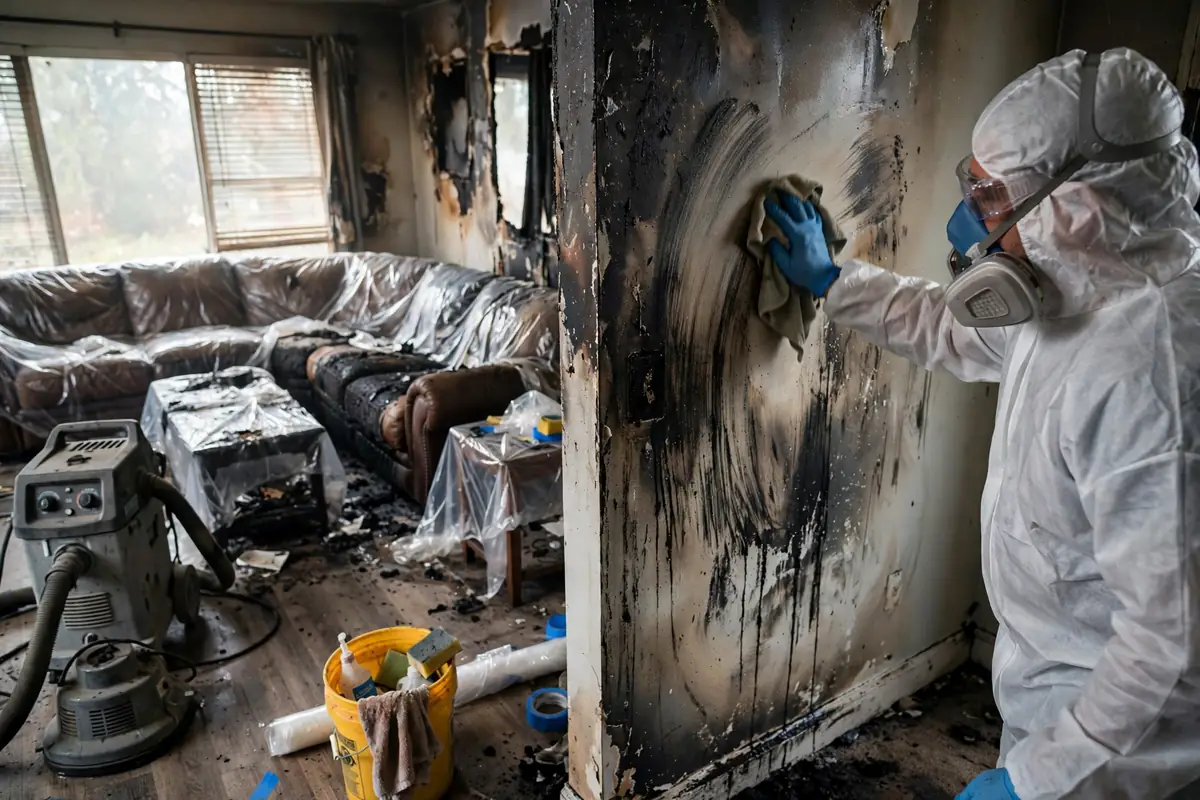
What happens after the fire trucks leave
Smoke and soot cleanup runs in a set order: test the soot, dry-clean the loose residue, wet-clean what is bonded, clean the HVAC system that spread the smoke, then treat the odor at its source. Soot is acidic and keeps damaging surfaces while it sits, so the cleaning starts in the first days, before the residue sets.
San Diego smoke work has a pattern of its own. The older homes of North Park, Hillcrest and Mission Hills carry lath, plaster and decades of additions, and smoke moves through them in ways a newer build would not allow. The canyon-rim neighborhoods, in Scripps Ranch, Tierrasanta and Rancho Bernardo, add a second kind of smoke job: wildfire smoke and ash that drift into homes miles from any flame, covered on our wildfire damage restoration page. Across the neighborhoods on our service areas page, a provider who works these streets knows which rooms to check first, including the ones that look clean at first glance.
Most home fires start the ordinary way. Nationally, NFPA figures put cooking first among home fire causes and heating second, and the everyday San Diego version is the same short list: kitchen fires, electrical faults in older panels, heaters and chimneys. The fire department handles the emergency. Everything after the trucks leave, the soot, the smell, the ducts, is restoration, and it starts the same day if the damage is going to stay as small as it can.
Smoke damage restoration San Diego: the job, step by step
Test the soot first
Before anything is wiped, small test patches show what kind of soot is on each surface and what it will respond to. Wiping the wrong soot the wrong way smears it into paint and fabric and doubles the work, so the testing comes first, room by room.
Dry-clean the loose soot
Loose residue is lifted with dry chemical sponges and HEPA vacuuming, working from the fire room outward. Dry methods come first because wet washing dry soot drives it deeper into porous surfaces instead of removing it.
Wet-clean the bonded residue
Greasy or bonded soot needs wet cleaning with detergents matched to the fuel that burned. Kitchen and plastic fires leave films that dry methods cannot shift, and each surface, paint, tile, sealed wood, is cleaned to its own tolerance.
Clean the HVAC system
If the system ran during the fire, it carried smoke to every vent in the house. The ducts, coils and air handler are cleaned as part of the job, or the stored soot blows back into cleaned rooms the next time the heating or cooling runs.
Clean or release the contents
Furniture, clothing and household goods are inventoried, then cleaned on site, packed out for specialist cleaning, or recorded as a loss. Our contents pack-out page covers that stage. Contents decisions are where a large share of a fire claim is won or lost.
Remove the odor at its source
Once soiled material is out and surfaces test clean, the remaining odor is treated in the structure itself, and porous surfaces are sealed before paint. The full method is on our odor removal page. Masking a smoke smell instead of removing it buries the problem for the next hot day.
Why soot behaves differently in every room
What burned changes the residue. A wood and paper fire leaves dry soot: a fine, powdery deposit that sits on surfaces and lifts with dry cleaning methods. A slow, smoldering fire, in upholstery or bedding, leaves wet soot: sticky, smeary, strongly scented, and much harder to shift. A kitchen grease fire or burning plastics leave an oily film that clings to everything and spreads if it is wiped like dry soot. Protein fires, burned food with no flame damage at all, leave a nearly invisible film with the strongest odor of the lot.
Smoke itself goes everywhere the air went while the fire burned. It settles heaviest near the fire and thinnest at the far end of the house, but thin soot still etches glass, stains plastic and yellows paint over the following weeks if it is left alone. That is why the cleaning order runs from the worst room outward, and why a provider opens cupboards, closets and the attic hatch in rooms that look untouched.
- Walls and ceilings. Dry chemical sponges first; wet washing a dry soot just drives it into the paint. Surfaces are sealed and repainted only after the residue tests clean.
- Hard surfaces. Glass, metal, sealed stone and tile clean reliably, but soot left sitting etches glass and pits chrome, so these are early jobs, not last ones.
- Soft furnishings. Upholstery, drapes and clothing are cleaned off site where possible. Mattresses and heavily soaked items near the fire are usually recorded as losses instead.
- Electronics and appliances. Soot is acidic and corrodes circuit boards from the inside. Items in smoked rooms are tested before they are trusted, and food, medicine and cosmetics exposed to smoke are discarded, always.
The smoke you cannot see
The soot that decides whether a smoke job succeeds is mostly hidden. Hot smoke rises and pressurizes the rooms it passes through, pushing residue into attic insulation, wall cavities, outlet boxes and the inside of the ductwork. A house can look clean, smell clean on a cool morning, and still carry a reservoir of soot overhead that bleeds odor back into the rooms on the first warm afternoon. Providers check the attic hatch, pull outlet covers and inspect inside the ducts for exactly this reason.
The HVAC system is the biggest reservoir of all. If it ran while the fire burned, it did the smoke's distribution work for it, room by room, and it keeps the evidence in its coils and filter. That is why duct cleaning sits inside the smoke scope rather than on a later wish list, and why the first hours after a fire follow the order set out on our emergency fire damage restoration page: document, secure, then clean before the soot sets.
The documentation decides the claim
What adjusters work from
Photographs of every room before cleanup, a written inventory of damaged contents with ages and values as best you know them, the provider's itemized scope, and receipts for emergency work and living expenses. On fire claims, the file is among the most documented in the business, and claims stall when the cleaning started before the record did.
Where smoke claims go wrong
Washing soot with the wrong method and spreading it. Throwing away damaged contents before they are listed. Painting over sooty walls to hide the smell, which seals the evidence in and the odor with it. And leaving the HVAC system out of the scope, so the smell returns with the first warm day and the argument starts again.
This is the general pattern for California fire claims, not advice about your policy. For the money side, HomeAdvisor's national cost guide puts soot removal at $2,000 to $6,000 and smoke damage cleaning at $200 to $1,200 per room, and our fire damage restoration cost guide sets those national figures beside the published San Diego ranges.
Common questions about smoke and soot
Can we stay in the house after a fire?
Sometimes, after a small fire confined to one room, if the utilities are on, the structure is sound and the smoke damage is light. After anything larger, usually not. Soot particles keep circulating, the smell works into soft furnishings, and power, water or gas are often shut off at the meter until they are checked. If the kitchen or the only bathroom is out of action, most families leave even when the bedrooms look untouched. Your insurer's living expense cover exists for exactly this situation.
Does the smoke smell ever really come out?
Yes, when the odor is removed at its source instead of covered up. The smell lives in soot residue, in soft materials that absorbed smoke, and in paint and plaster that took it in while hot. The work is cleaning or removing the soiled material, cleaning the HVAC system that spread the smoke, then sealing and repainting once surfaces test clean. Scented sprays and paint over dirty walls both fail, and a good provider will tell you that plainly before you pay for either.
What gets thrown away after a fire, and what can be cleaned?
Hard, non-porous items usually clean well: glass, metal, sealed stone, most appliances. Porous items are judged one by one. Upholstery, mattresses, carpets and clothing near the fire often hold soot and odor past the point where cleaning costs more than replacement, while the same items in a closed room down the hall may clean up fully. Food, medicine and cosmetics exposed to heat or smoke are thrown away, always. Every decision goes on the contents inventory, because that list is part of your claim.
Why does the smoke smell come back when the heating or cooling runs?
Because the system moved the smoke during the fire and stored it. While a fire burns, the air handler and ductwork pull smoke through the whole house and coat the inside of the ducts, the coils and the filter with soot. After the rooms are cleaned, the next heating or cooling cycle blows that stored soot back out through every vent. The fix is cleaning the ducts and the air handler as part of the smoke job, not after the smell returns.
Will insurance pay for smoke damage cleanup?
Fire is a covered peril on standard California homeowners policies, and a fire claim usually reaches well past the burned room: smoke and soot damage, the water used to fight the fire, contents cleaning, and often additional living expenses while the home is unfit to live in. What decides the size of the payment is documentation. Photos before cleanup, an inventory of damaged contents and the provider's written scope are what adjusters work from. Policies differ, so confirm the details of yours early.
How long does smoke damage cleanup take?
Cleaning is the fast clock on a fire job. Testing, dry cleaning and wet cleaning a smoke-damaged home usually takes days, not weeks, and the worst rooms set the pace. Odor treatment and duct cleaning add time at the end. What stretches the calendar is rarely the cleaning itself; it is contents decisions, insurer approvals and the rebuild that follows. Your provider should give you the cleaning timeline and the rebuild timeline in writing, as two separate answers.
Dealing with smoke damage in San Diego?
Get the soot tested and moving before it sets, and the ducts cleaned before they hand the smell back. Reach out now and get connected with a local provider who handles smoke and soot work across San Diego. The full service starts from the fire damage restoration San Diego homepage, and the first-day order of work is on our fire damage cleanup page.
Get Help Now